
Preserving means changing.
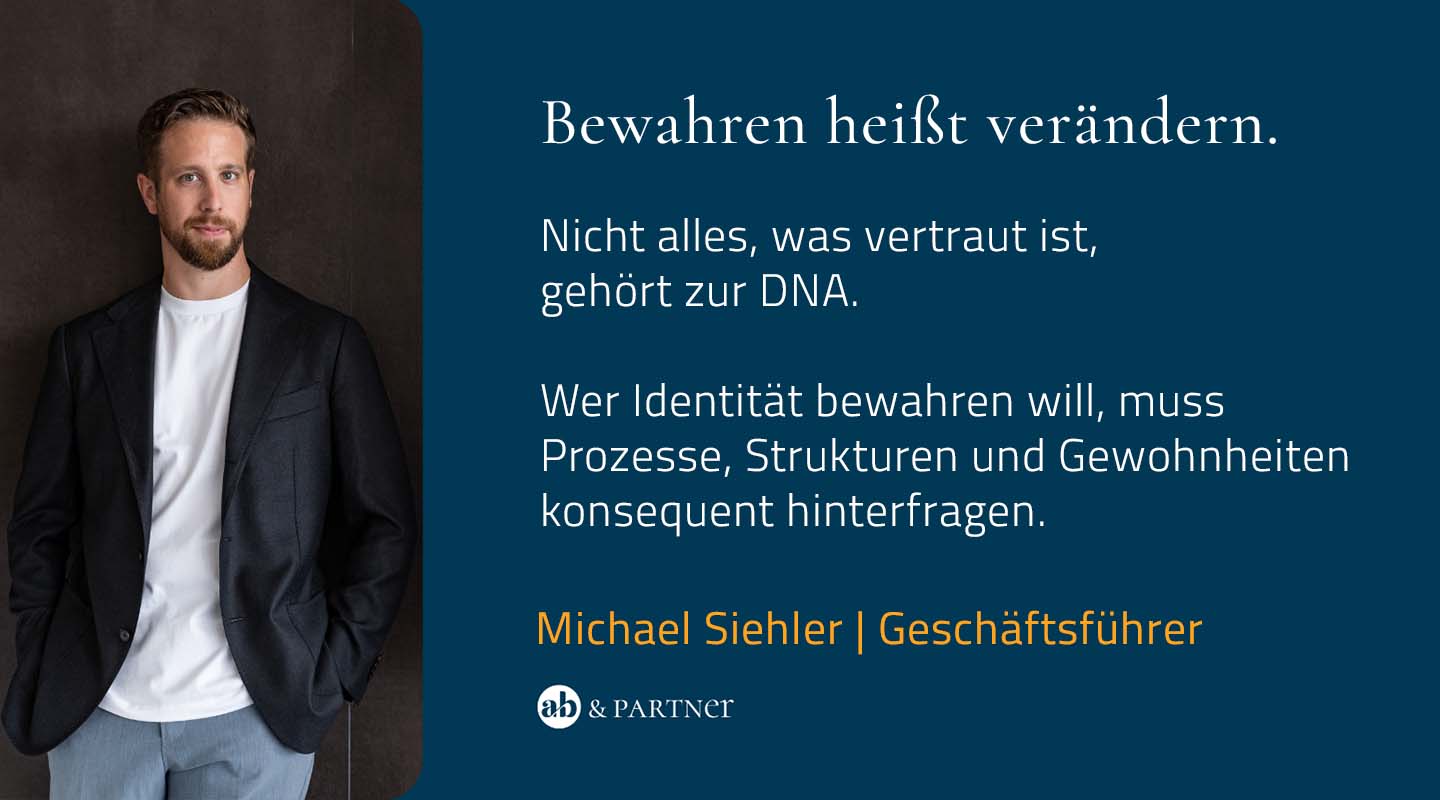
Those who want to preserve everything will eventually lose what really matters.
Many companies want to continue evolving while remaining the same.
They want to preserve the identity they’ve built over time.
They don’t want their culture to be lost.
They want customers to continue recognizing the company.
That’s true. But identity and habit are often confused.
Then old processes are suddenly regarded as tradition.
Structures that have evolved over time are seen as corporate culture.
And familiar ways of working are viewed as an immutable part of the company’s DNA.
Yet a company’s identity does not consist of doing everything exactly as it was done in the past. It lies in what the company stands for and the value it creates for its customers.
Preserving, therefore, does not mean standing still.
Preserving means translating the core into a new era.
This is how change succeeds while preserving identity:
⭐ Core | Clarify what is truly worth preserving: values, aspirations, customer benefits, and entrepreneurial convictions.
⭐ Vision | Translate this core into an ambitious vision for the future. It’s not about continuing the past, but about making the identity fit for the future.
⭐ Habits | Consistently assess which processes, structures, and routines still serve the core and which have come to hinder it.
⭐ Involvement | Engage the people who have shaped the company. They know its strengths and can carry them forward into the future.
⭐ Consistency | Let go of what is merely familiar. Change only becomes effective when decisions are actually implemented.
Important: Transformation does not automatically destroy identity.
On the contrary.
A clearly guided transformation protects the core of the business from losing its significance due to outdated structures.
This is how future-readiness is achieved with purpose: The core remains. Its form continues to evolve.
1 | Preserving means changing. ✅
2 | Credibility cannot be delegated.
3 | Leadership doesn’t have to know everything.
4 | Fairness isn’t consensus.
5 | Speed requires transparency.