
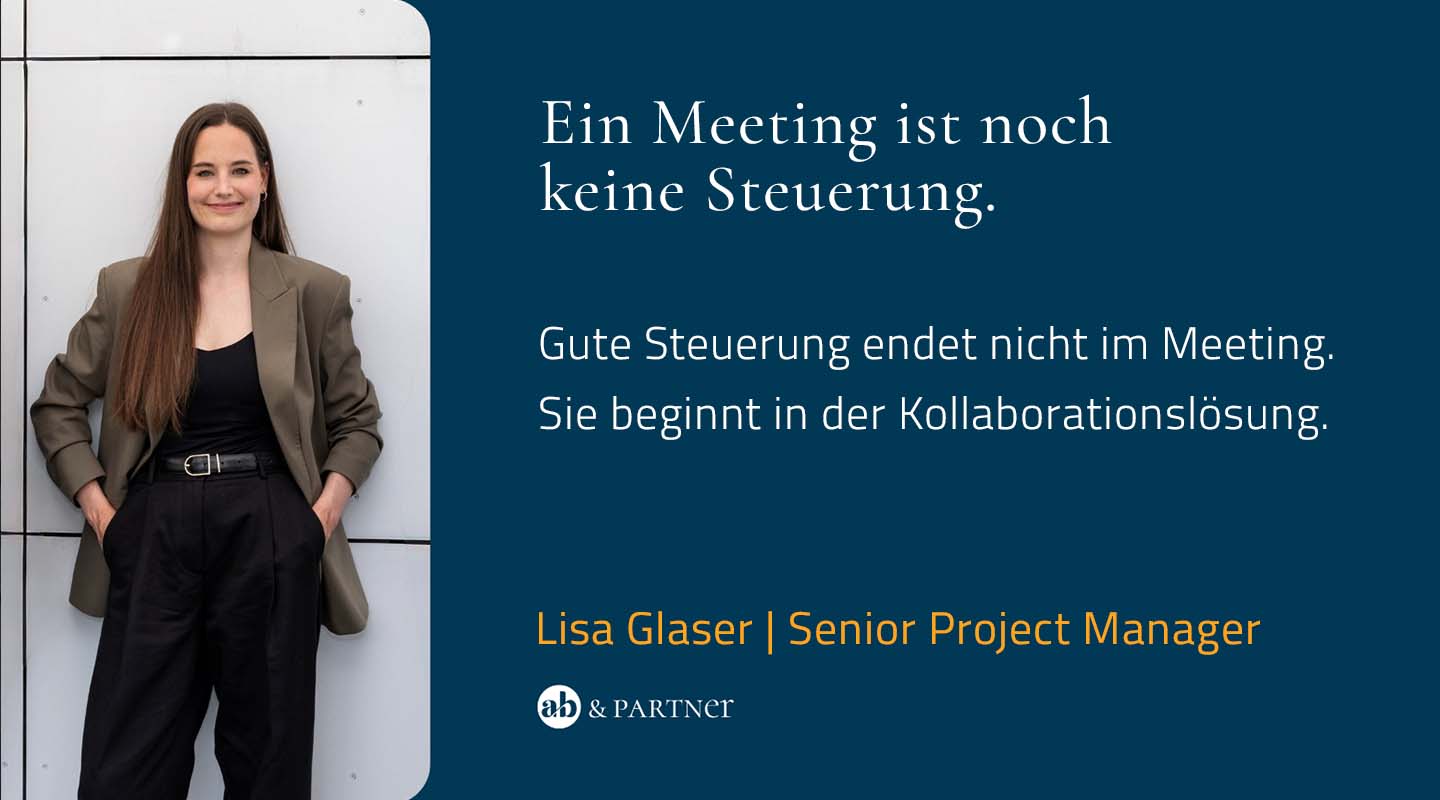
A meeting does not equal management.
Many meetings appear productive. So do packed calendars.
But a packed meeting does not equal leadership. And a packed agenda does not equal management.
There is discussion. Voting. Presentations. And yet, the questions often remain: What was decided? Who is doing what? By when?
That is precisely where leadership turns into busyness. Not because there isn’t enough discussion. But because too little comes of it.
A good meeting doesn’t produce slides. A good meeting creates clarity.
And this clarity doesn’t belong on Post-its, in minutes, or in people’s heads. It belongs in a digital collaboration solution where decisions, tasks, owners, and next steps are visible to everyone.
This is how we run meetings that steer the course:
⭐ Agenda | Every meeting starts with a clear purpose. What needs to be clarified, decided, or moved forward today?
⭐ Participants | Not everyone. Just the right people. Those who can contribute or make decisions sit at the table.
⭐ Decisions | Decisions are prepared or made during the meeting. They aren’t postponed because “we need to talk about it again.”
⭐ Documentation | Results, open items, and next steps are immediately recorded in a digital collaboration tool. Otherwise, the discussion starts from scratch at the next meeting.
⭐ Accountability | Every task has an owner. Not “we.” Not “the team.” A name. A deadline.
Important: Good meetings aren’t longer.
Good meetings are clearer. And that’s exactly why they’re more effective.
This creates management without meeting drama: fewer loops, more decisions, more implementation.