
Ownership needs a name.
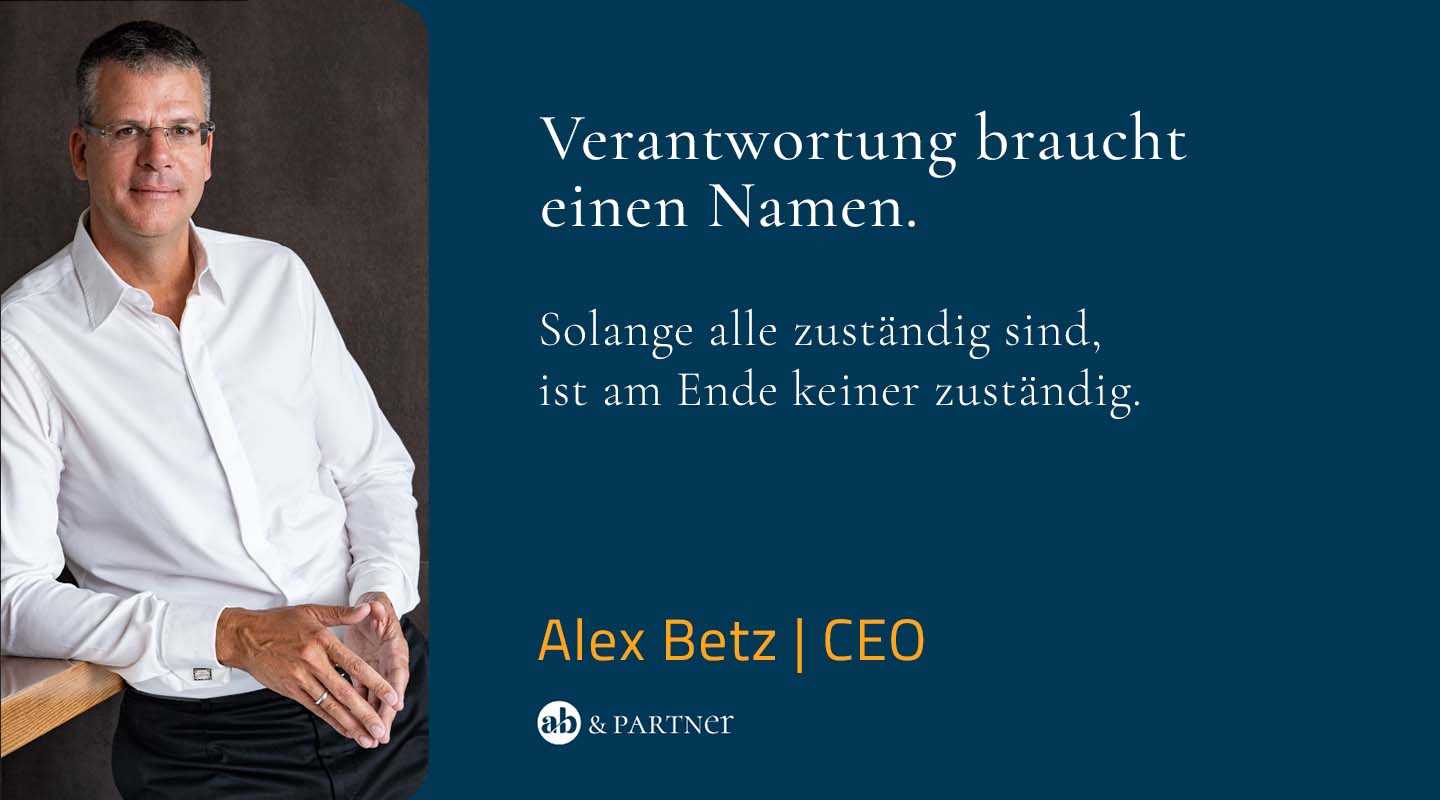
If everyone is responsible, no one is ultimately responsible.
Committees deliberate. Teams discuss. Many people pitch in.
And yet, it often remains unclear who is actually implementing a project.
Because: Implementation doesn’t require a large group. Implementation needs a clear owner.
Many companies spread responsibility across multiple people. That sounds cooperative. But it often leads to decisions being left unresolved, priorities becoming blurred, and issues going in circles.
An owner does not replace a team. An owner makes teamwork effective.
This is how we live ownership:
⭐ Clarity | Every relevant issue has an owner. Not “the team.” Not “we.” A name.
⭐ Mandate | An owner doesn’t just facilitate. They have the mandate to drive issues, prepare decisions, and advance implementation.
⭐ Accountability | The owner is accountable for progress, prioritization, and results. Not for everything alone. But for making progress.
⭐ Involvement | A good owner involves the right people. Not everyone. But those who are crucial for quality and speed.
⭐ Consistency | Decisions, next steps, and open items are documented. Immediately. Otherwise, ownership remains a title without impact.
Important: Ownership does not mean hierarchy.
On the contrary. Ownership creates the clarity that allows teams to work independently, quickly, and with focus.
This leads to execution without excuses: fewer loops, more responsibility, more performance.